

Why a Strong CV is Only the Starting Point
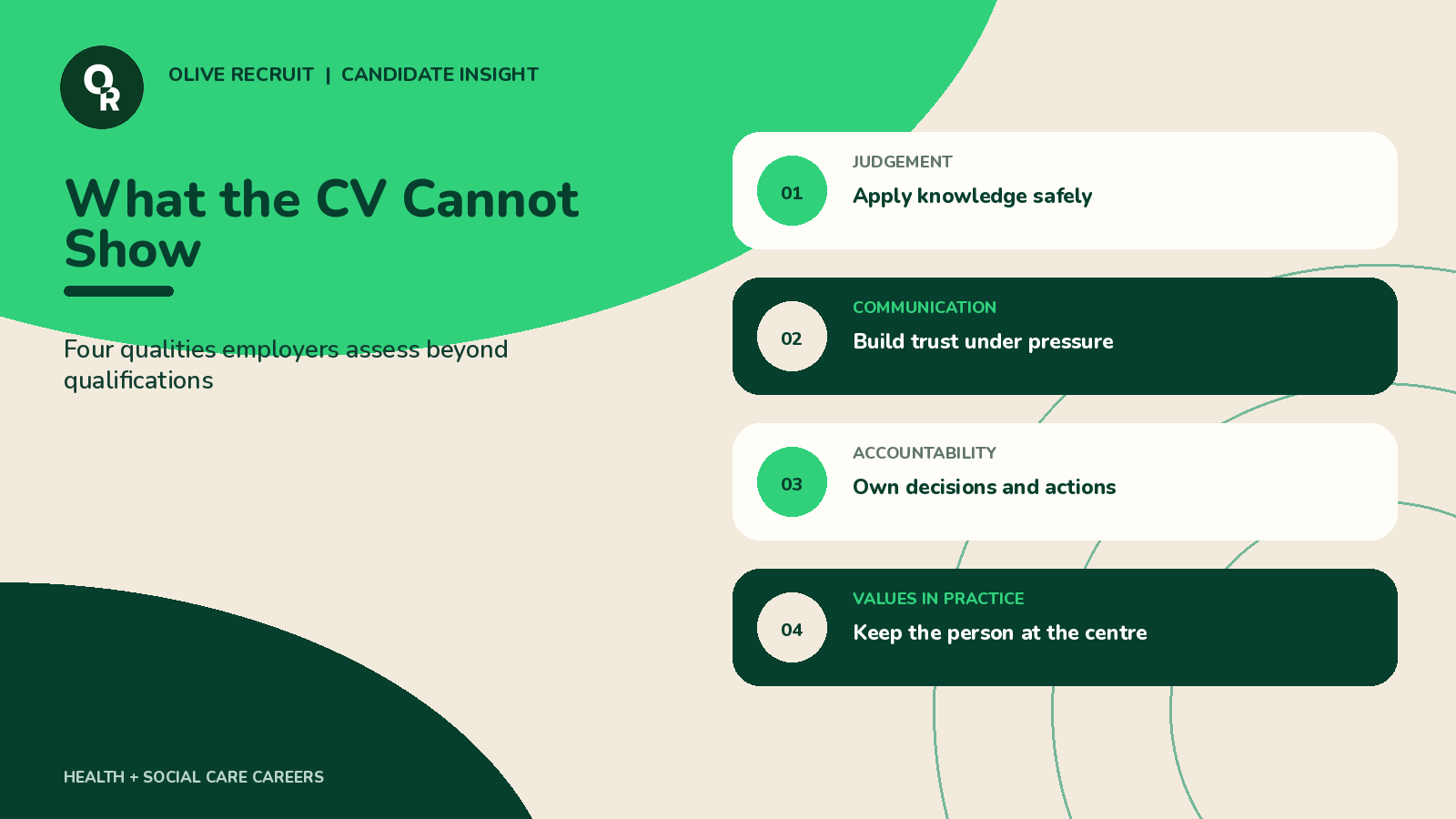
Your CV gives hiring managers an overview of your education, formal qualifications, technical skills, soft skills and employment history. It helps them decide whether you meet the essential requirements in the job description. However, it cannot fully demonstrate how you will communicate with a distressed person, respond to an anxious family member or work under pressure during a challenging shift.
That is why interviews in health and social care go beyond reviewing job titles and bullet points. Employers need evidence that candidates can communicate with compassion, exercise sound judgement and contribute positively to the people receiving care, their colleagues and the wider service. Your next interview could determine your new role, so go the extra mile and show up to look beyond the CV and demonstrate your communication skills and emotional intelligence.
Two qualified candidates may have similar experience on paper, yet one may build trust more quickly and work more effectively within a team. The difference often becomes visible in the examples a candidate shares and how they discuss their responsibilities.
“When two candidates have similar qualifications and experience, the person who stands out is usually the one who communicates clearly, gives real examples and shows they genuinely understand the role and the people they will be supporting. In complex care, attitude, empathy, patience and good judgement matter just as much as what is written on the CV.”
– Ana Bojadzi, Senior Permanent Recruitment Consultant at Olive Recruit.
Adaptability and Learning Agility
Care environments rarely remain static. A person’s needs may change, a service may introduce a new process, or updated guidance may affect an established way of working. Employers therefore value candidates who can adapt without losing focus on safety, consistency or person-centred care.
Adaptability does not mean accepting every change without question. It means understanding why a different approach is needed and adjusting your practice responsibly. Learning agility is the willingness to absorb feedback, develop new skills and apply that learning in practice.
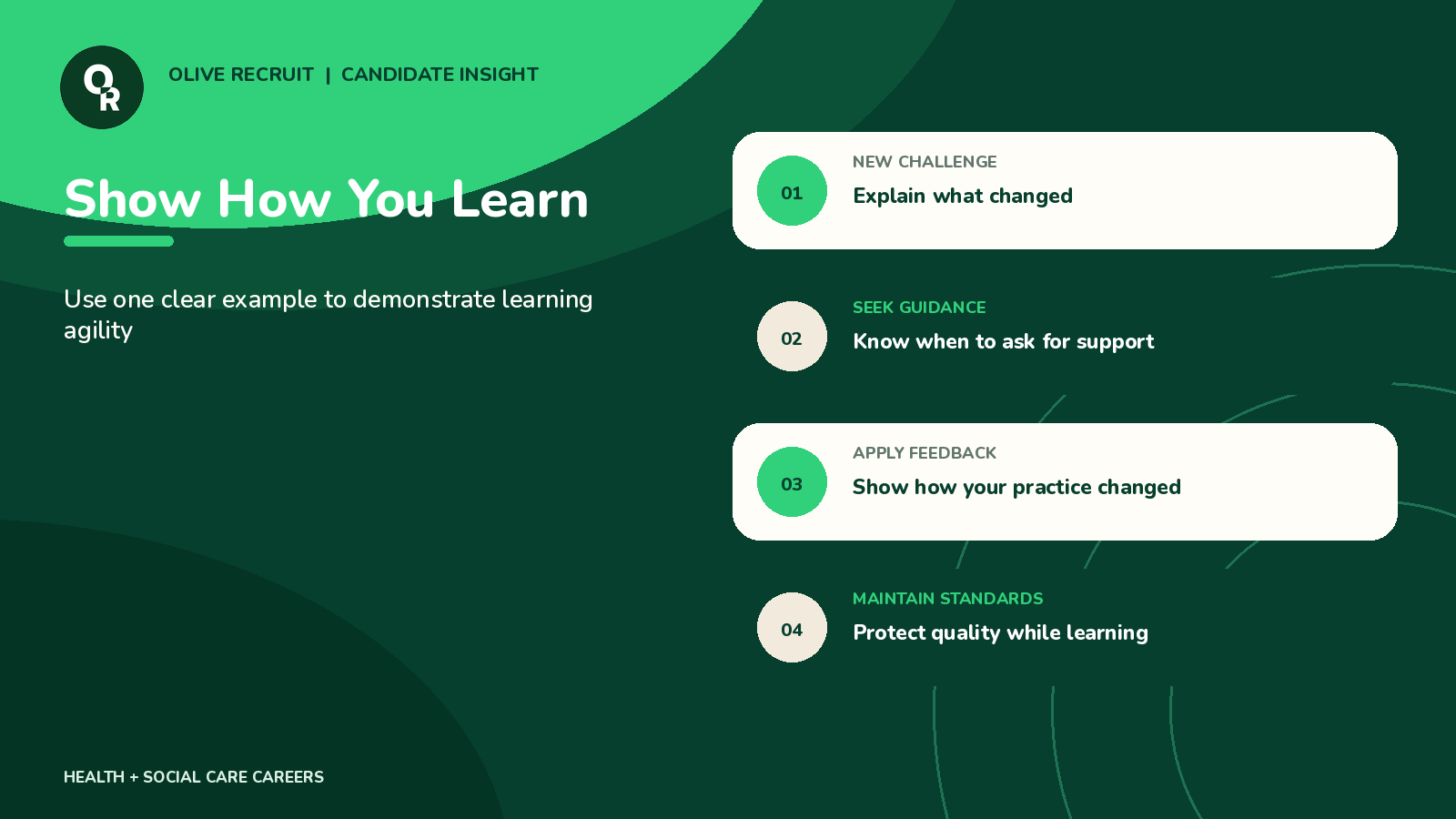
During a job interview, employers may ask how you responded to change or handled a situation where your first solution didn’t work. They are assessing your judgement and willingness to develop, not looking for someone who has never made a mistake. Remember, people motivated to learn and problem-solve have the best chance of growth in future opportunities.
Cultural Fit and Multi-Disciplinary Teamwork (MDT)
Technical competence matters, but safe and effective care also depends on whether a candidate’s values and working style align with the company culture of the service provider. As explored in our previous blog about culture fit, organisational culture is visible in how colleagues communicate, how concerns are escalated, and whether the person receiving support remains central to decisions.
Values alignment does not mean recruiting people who all think alike. It means finding candidates whose attitude supports respectful, safe and inclusive care.
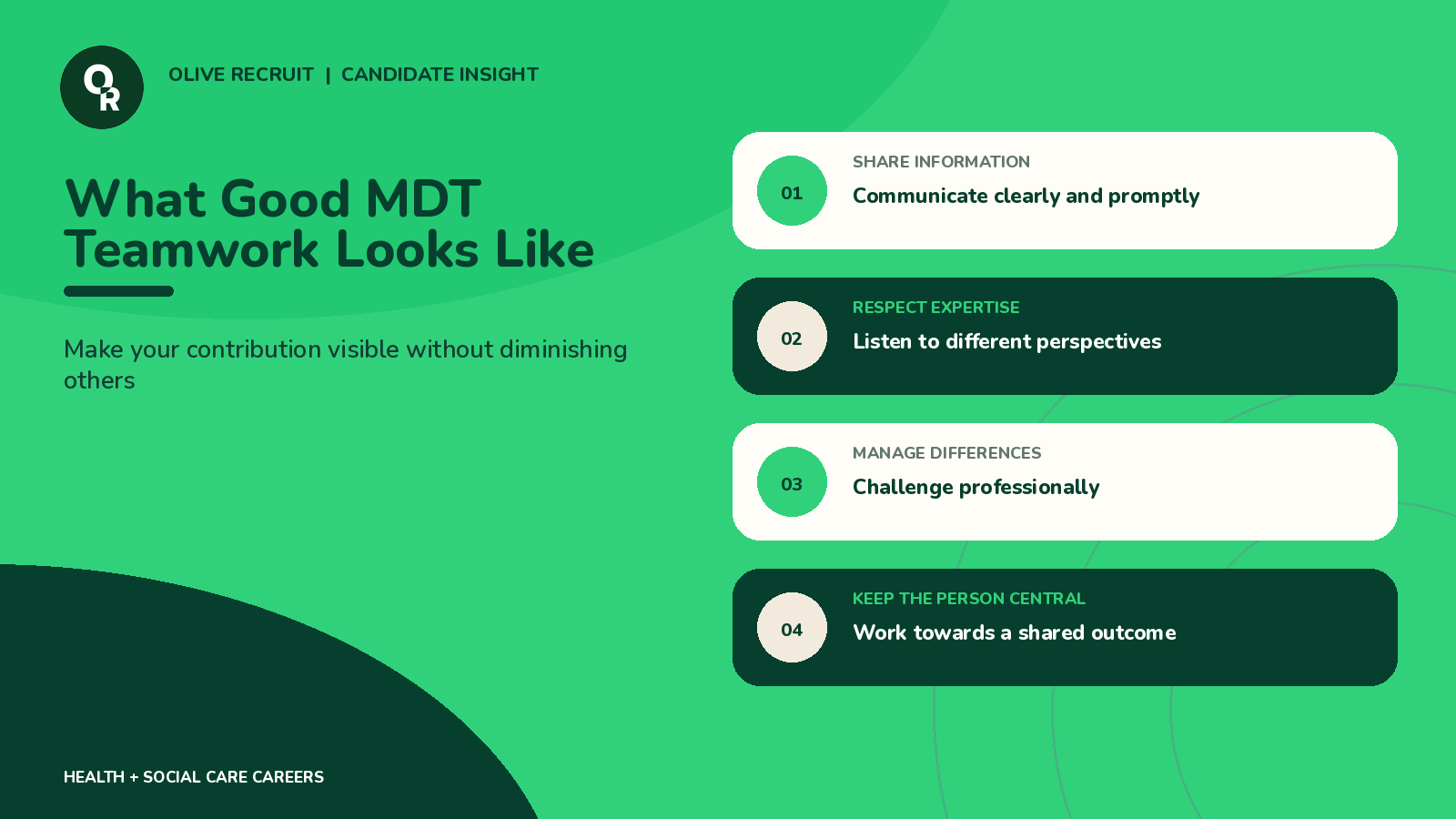
Strong communication skills are essential in a multidisciplinary environment. You may work with nurses, support workers, therapists, social workers, commissioners, families and other stakeholders. Employers assess whether you listen, share relevant information, respect others’ expertise and contribute to a shared plan while remaining accountable for your own decisions.
Problem-solving and Initiative
Employers want people who think, not just follow instructions. Policies, care plans and procedures provide an essential framework, but care settings still involve situations without a simple step-by-step answer. A person may refuse support unexpectedly, staffing arrangements may change at short notice, or a family may raise an urgent concern.
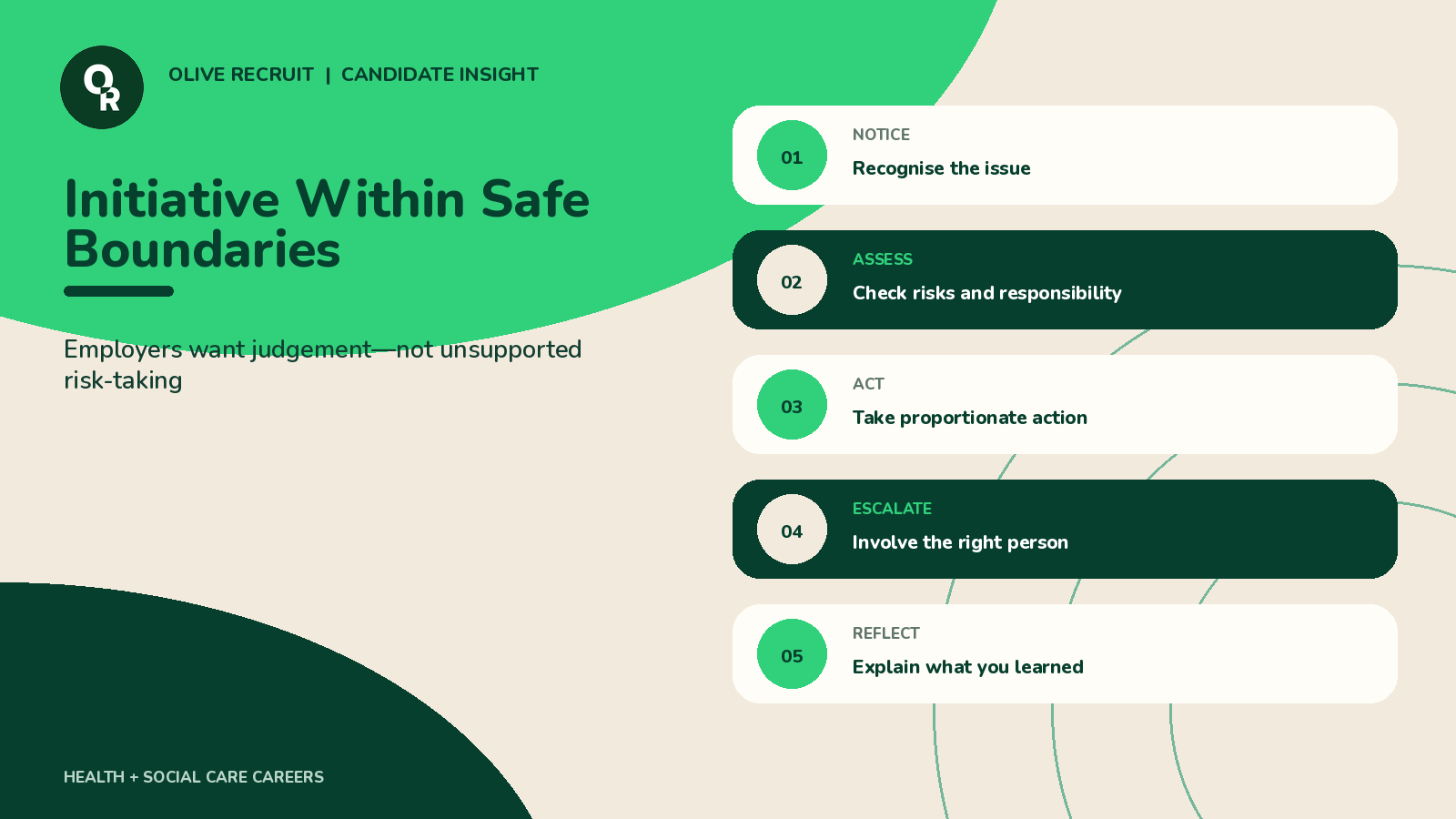
A strong candidate can recognise a problem, assess what falls within their responsibility and take proportionate action without creating unnecessary risk. Initiative does not mean acting alone or outside agreed boundaries. It means knowing when you can make an informed decision, when you need guidance and when a concern must be escalated.
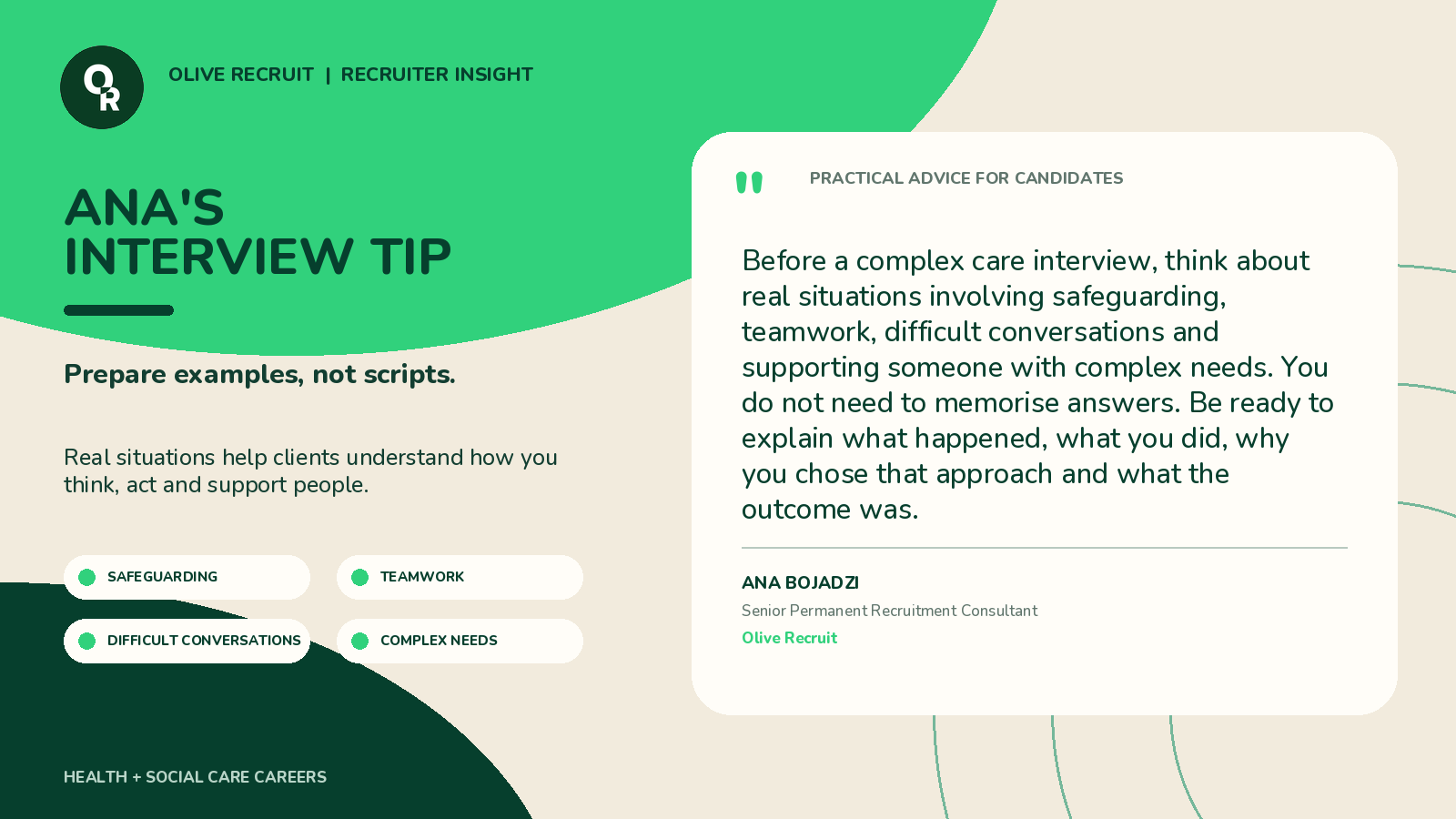
The strongest examples explain the challenge, the information considered, the action taken and the outcome. This demonstrates judgement more effectively than simply describing yourself as proactive.
Emotional Resilience & De-escalation Ability
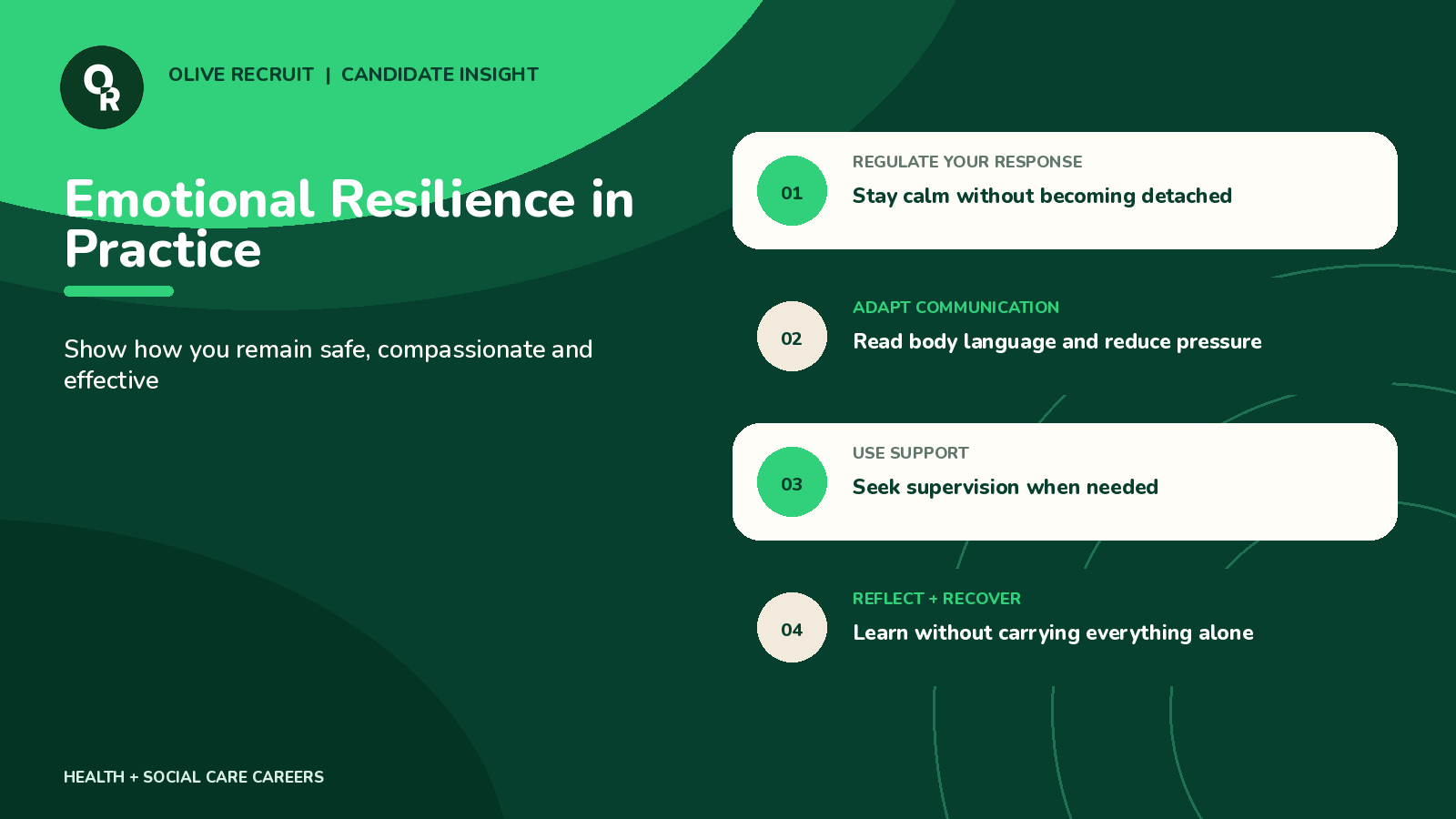
Health and social care work can involve distress, conflict, grief and emotionally demanding decisions. You may encounter a person in pain, an overwhelmed family member or a colleague under pressure. Emotional resilience does not mean remaining unaffected. It means managing your response, seeking support when necessary and continuing to work safely and compassionately.
Reliability is equally important. In a care setting, it means being someone the people receiving support and your colleagues can depend on: arriving prepared, following agreed plans, communicating changes promptly and completing responsibilities consistently.
Emotional intelligence can make all the difference during a difficult interaction. Employers value candidates who recognise their own emotional state, notice body language and adapt their communication before tension escalates. Effective de-escalation may involve lowering your tone, giving someone space, reducing immediate demands and acknowledging distress.
Professional resilience also includes using supervision, reflecting after difficult events and protecting your wellbeing so that pressure does not compromise care. Honest reflection usually creates more credibility than pretending every situation was handled perfectly.
Safeguarding Awareness
Safeguarding is central to health and social care. Employers look closely at how naturally it features in the way candidates discuss their work. Awareness goes beyond knowing that a policy exists, and it includes recognising possible abuse, neglect, exploitation or unsafe practice and having the confidence to act when something feels wrong.
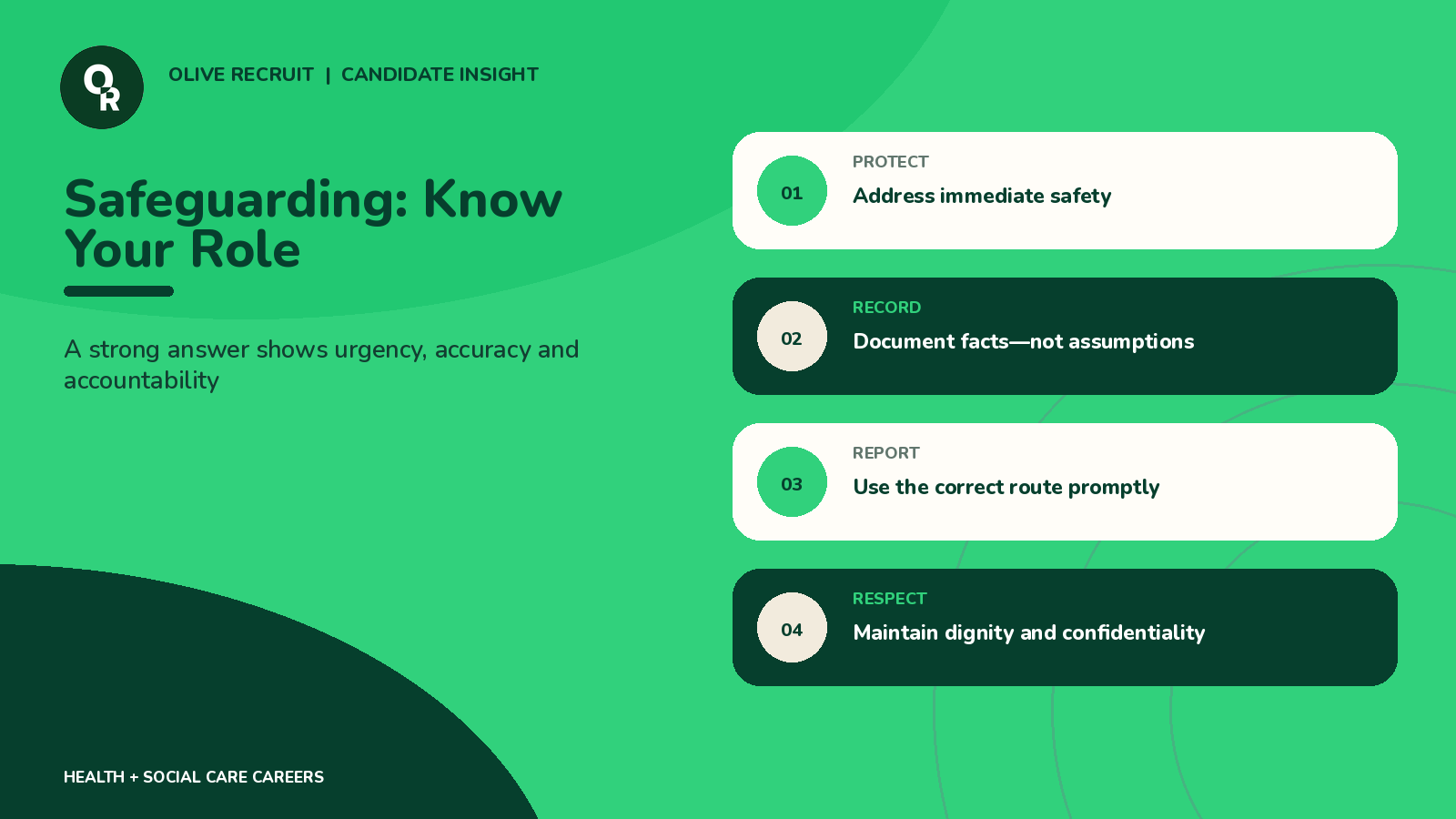
Candidates should understand how to protect immediate safety, record facts accurately and report a concern through the appropriate route while maintaining confidentiality. Employers may also assess whether you know when to share information to protect someone from harm.
Also, safeguarding requires professional curiosity. A single change may have several explanations, but repeated patterns, changes in behaviour or inconsistent information may require closer attention. While, formal training is essential, it does not replace sound judgement, accurate reporting and the willingness to speak up.
Understanding Behaviour as Communication
In health and social care, behaviour as communication is observed and assessed verbally and non-verbally. Therefore, behaviour may communicate pain, fear, frustration, trauma, sensory overload, an unmet need or difficulty understanding what is happening, through body language, such as facial expression, heightened tone of voice, pace, eye contact, etc. A thoughtful candidate approaches behaviour with curiosity rather than seeing it only as something to control or correct.
Employers value professionals who consider what may be influencing a situation and what the person may need. This can involve reviewing possible triggers, the environment, communication methods and the responses of those providing support. It also means following individual care plans, recording observations and sharing relevant information with the wider team.
Understanding the possible function of behaviour does not excuse harm or remove professional boundaries. It helps services respond in ways that are safer, more respectful and more effective. Candidates who can explain how they have applied this understanding demonstrate empathy, professionalism and person-centred thinking.
Get Your Talent Known with Olive Recruit
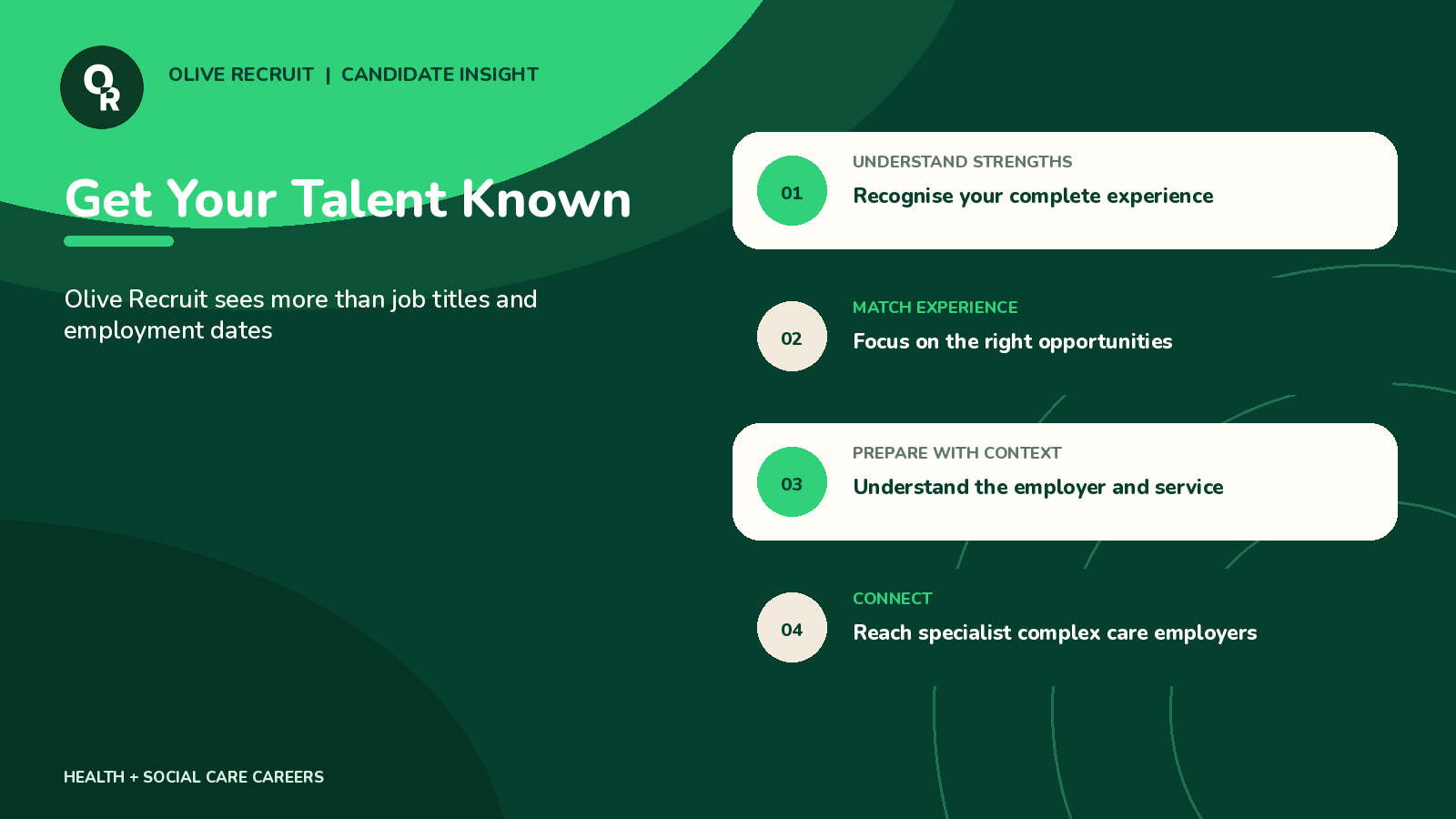
It is not always easy to communicate your full value through a CV. Olive Recruit consultants take time to understand your experience, career goals, motivation, enthusiasm for the role and particular industry, and the type of service in which you are most likely to succeed. This helps our recruiters recognise qualities employers value that may not be immediately visible through job titles or qualifications.
When a relevant opportunity arises, we can explain the role, service and employer expectations, helping you focus on the experience, technical knowledge and soft skills that matter most. We can also help you prepare examples that demonstrate judgement, communication, safeguarding awareness, initiative and teamwork.
We do not invent strengths or coach candidates to provide scripted answers. Our role is to help qualified candidates communicate their genuine experience clearly and confidently.
Olive Recruit specialises in health and social care recruitment, with particular expertise in complex care. We work with healthcare providers, specialist services and care homes supporting people with complex needs, helping them recruit professionals with the right skills, values and approach.
If you are considering your next role in complex care, contact Olive Recruit through our website. We will take the time to understand what you can contribute beyond your CV and introduce you to opportunities where your experience and approach are genuinely valued.
