

What is Full-Cycle Recruiting?
Full-cycle recruiting, also called the full life cycle recruiting process, is an end-to-end hiring approach in which a single recruiter handles every step of the entire process. The same recruiter stays involved from prospect to placement. Instead of dividing tasks among teams or departments, a full-cycle recruiter owns the entire journey from the moment a hiring need is identified through to when the new hire is settled into their role.
This method provides a single point of contact for both the candidate and the hiring manager, covering the entire hiring cycle: creating the job description, sourcing candidates, screening candidates, managing the interview process, extending offers, and handling onboarding. This focused approach means better communication, fewer delays, and a truly exclusive and genuinely positive candidate experience.
How is full-cycle recruiting different from traditional recruiting?
Traditional recruiting relies on a team of professionals to complete the entire recruitment process, handing off potential candidates from the sourcing team to the screening team to the interview team, and then finally to the hiring manager and the HR team.
On the other hand, the full-cycle recruiter manages all those steps by themselves, providing continuity throughout the entire hiring process.
The segmented approach of the traditional recruitment cycle can work, but it creates potential friction points. Messages often get repeated, but sometimes they get lost because no one owns the entire cycle, and recruiters can only see a small part of the whole picture.
Pros and Cons of the Full-Life Cycle Recruiting Process
Before we guide you through the steps, we must weigh the benefits of full-cycle recruiting against the challenges it presents. Here’s a clear breakdown:
Pros:
- Provides continuity, reducing miscommunication and building candidate trust.
- Improves candidate experience through consistent communication from a single point of contact, boosting offer acceptance rates.
- Leads to better hires through deeper insight into the role requirements and company fit.
- Speeds time to hire and enhances the quality of hire (long-term performance and retention of new employees) by fostering recruiter accountability.
- Minimises handoff errors by ensuring no details are lost between different team members.
Cons:
- Places a heavy workload on individual recruiters, increasing the risk of burnout during high-volume periods.
- Demands broad skills across sourcing, screening, interviewing, and negotiations.
- Can create bottlenecks if the leading recruiter is unavailable due to illness or leave.
- Harder to scale for companies with frequent needs for multiple hires.
- Potential for quality dips in the stages of the recruitment process where the recruiter has less expertise.
Steps of the Full-Cycle Recruiting Process
A holistic recruitment process must follow a structured journey that begins long before a candidate applies and continues well after they start the job. Using metrics such as time to hire, time to fill, and quality of hire can provide valuable insights into the effectiveness of the recruitment process.
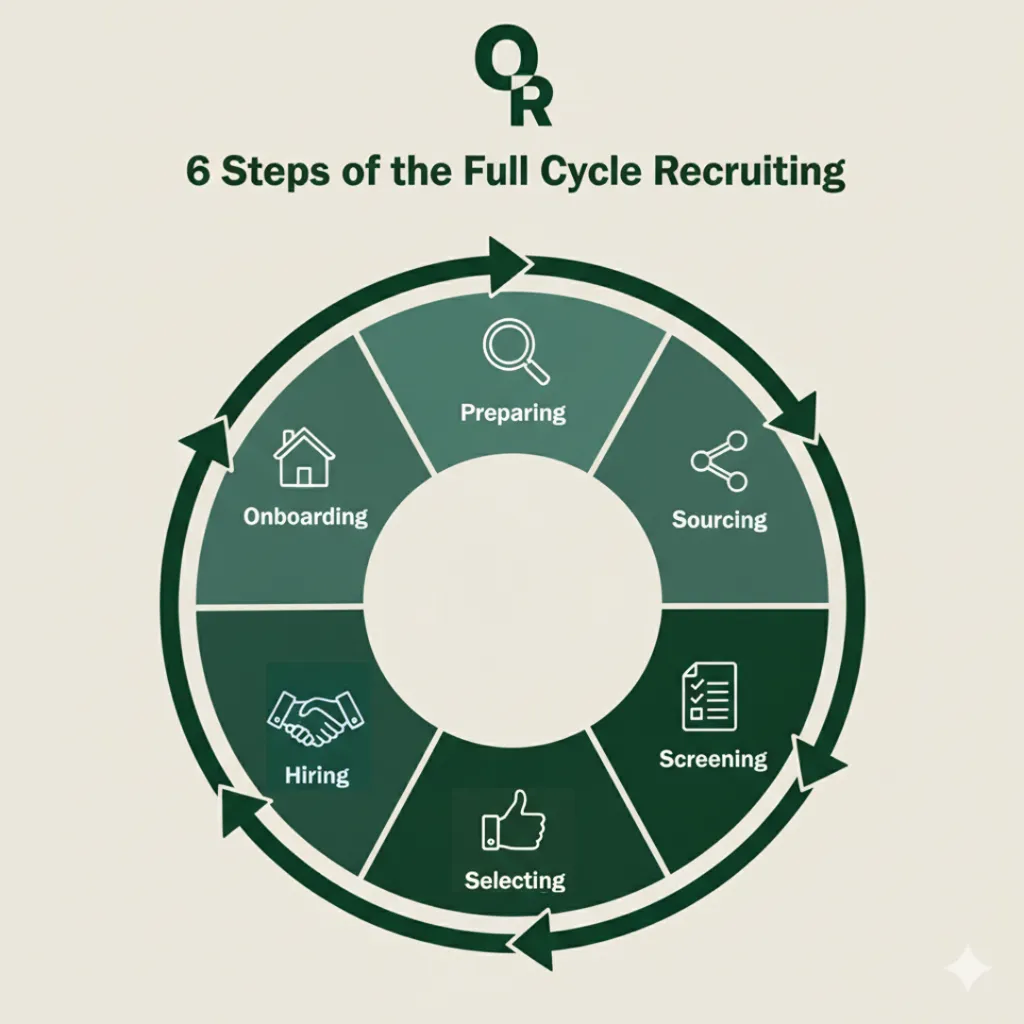
1. Preparing
Before you create your job description and place it on different job boards, you need to do your groundwork. This preparation phase is about getting crystal clear on what you’re actually trying to hire for. Many companies rush through this hiring stage, but getting it right here saves an enormous amount of time later.
Start by working closely with the hiring manager to understand the role in detail. Thoroughly question and define key responsibilities, skills, cultural fit, behavioural traits, etc., to create an ideal candidate persona which will precisely identify the prospect. Talk about the final goals for the potential hire, whether it is mandatory to find an already built professional with 15 years of experience, or you can have an option B, going for a less experienced candidate, but with a strong potential for improvement? And finally, set realistic timelines for the full recruitment life cycle.
2. Sourcing
Now that you know what you’re looking for, it’s time actually to find relevant candidates. You pretty much know the drill of how to identify and attract actively looking prospects: you’ve got all the known job boards filled with your job ads, and you’ve also got LinkedIn and Indeed covered. But the golden egg most often lies in the passive candidates. The ones who are happily employed, but might be interested if the right opportunity, like yours, comes up.
Passive sourcing involves directly reaching out to talented individuals who have already been gathered into a diverse, high-quality candidate pool. This talent pool is every recruiter’s investment in success. It’s not done only when a role opens – it’s a constant quest towards building relationships and staying connected. It requires solid communication skills, tapping into professional networks, attending industry events, and reaching out to certain professionals before you actually need to hire them.
3. Screening
Once applications start coming in, screening is what separates the strong candidates from those who don’t quite fit. Screening typically involves reviewing resumes, conducting brief phone or video calls, and asking initial qualifying questions. The recruiter checks things like salary expectations, availability, and whether the candidate’s experience actually matches what was described in the job post. This early filtering saves time because it’s better to find out details now than to invest in interviews and then discover a mismatch.
In this phase, the use of technology and automation tools, such as Applicant Tracking Systems (ATS), could really ease and facilitate the process. It filters resumes based on keywords and automates initial screenings against the criteria established during the preparation stage. It can even help with later phases, such as scheduling interviews and follow-ups.
4. Selecting
The selection process is the intensive evaluation phase. It consists of several types of interviews, assessments and tests, involving the hiring manager and team members, along with the recruiter. In this step, you can find skills tests, personality tests, and work assignments to measure technical capability and behaviour.
Throughout this stage, the full-cycle recruiter manages logistics, coordinates the scheduling process, collects feedback, and keeps the candidate informed every step of the way. They’re also answering questions, addressing concerns, and managing expectations, keeping the prospects engaged and committed to this particular job application.
5. Hiring
Once everyone agrees that a candidate is the right fit, it’s time to make an offer and get them over the line. The hiring stage involves extending the formal job offer, negotiating any terms that need adjusting and getting them to accept.
In traditional recruiting, handing off this step to someone in HR or management can cause problems. But in full-cycle recruitment, the same person who has built trust with the candidate now guides them through the offer stage, leaving no room for misunderstandings at the most crucial step of the talent acquisition process.
6. Onboarding
Many employers don’t understand the value of this final stage of the effective full-cycle recruiting, especially for motivating and retaining employees. A well-executed onboarding process sets the stage for the new hire’s future success. This might include introductions to key team members, access to systems and software, and training on company processes.
That’s why it’s crucial for a full-cycle recruiter to do this job, the one who was with the candidate from the beginning. In this phase, they already feel like close colleagues and someone they can rely on. It makes the new hire feel welcomed and confident that they made the right choice.
Full-Cycle Recruiter Job Description
Full-cycle recruiters are a true gem in the recruitment world. They are part sourcing expert, part interviewer, part negotiator, and part customer service representative. Even if you have a large recruitment team, hiring a professional who worked as a full-cycle recruiter would mean that you’ve hit a jackpot. They are certainly a jack of all trades and can jump in on every recruitment situation. They always have the whole picture in mind, delivering a recruiting masterpiece every time they handle the process from start to finish.
They are genuinely interested in connecting people with opportunities where they can succeed. They listen carefully to what both candidates and hiring managers need, ask good questions, and problem-solve when things get complicated. They’re accountable for results because they own the entire process, which often motivates them to improve how they work continuously.
Best Practices for Full-Cycle Recruiting
To conclude, we gathered the proven practices to make full-cycle recruiting even more effective. Go through the checklist here:
- Create candidate personas and scorecards.
- Practice passive sourcing.
- Build a diverse talent pool.
- Leverage recruitment software and automation, such as ATS.
- Conduct initial screening calls.
- Incorporate assessments.
- Make data-driven offers.
- Measure key metrics.
- Engage during onboarding.
Choose Olive Recruit as Your Recruitment Partner
Managing the entire hiring process on your own takes time, expertise, and resources that many companies simply don’t have. That’s where a dedicated recruitment partner comes in. Olive Recruit has built its approach on the principles of full-cycle recruiting, ensuring that your candidates receive consistent, personal support from start to finish.
Working with Olive Recruit means you get a team of experienced recruiters who understand the full journey. We handle everything from crafting compelling job descriptions to managing the onboarding process so your new hires feel genuinely welcomed. We work closely with your hiring managers to understand what you really need, source candidates actively rather than just hoping good ones apply, and ensure that every candidate, whether they get the role or not, has a positive experience with your organisation.
Remember, recruiting is ultimately about connecting people to opportunities.
Which road would you choose?
